
The Hidden Costs of Buying a Used Car (And How to Budget for Them)
Introduction
Buying a used car can be a smart financial move—but only if you go into it with your eyes wide open. While the sticker price might look appealing, many buyers overlook the hidden costs that come with owning a used car. From registration fees to unexpected repairs, these expenses can add up quickly if you’re not prepared. In this blog, we’ll reveal the most common hidden costs and show you how to budget for them effectively.
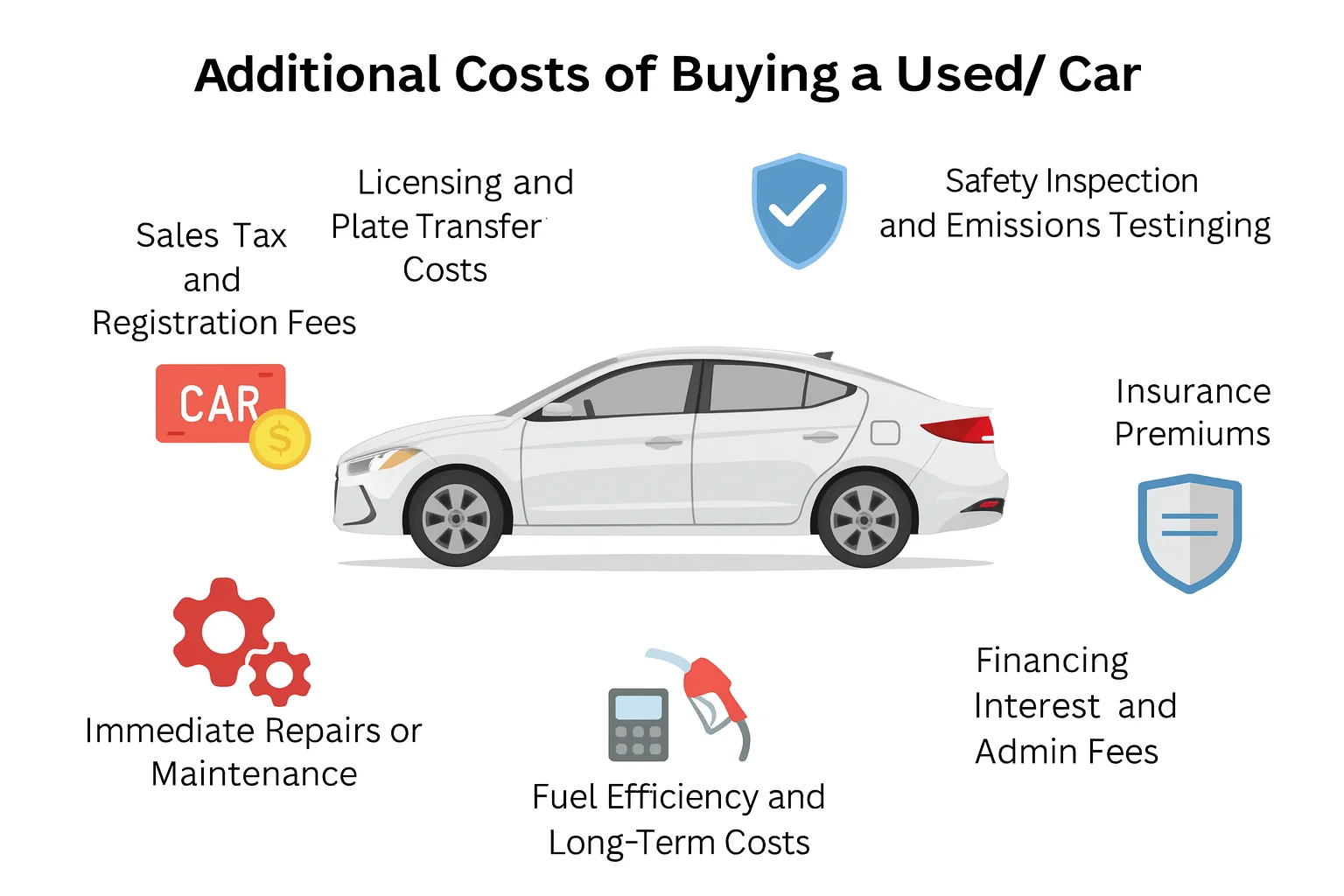
1. Sales Tax and Registration Fees
Even though you’re purchasing a used car, you’ll still have to pay provincial sales tax in Ontario (13% HST) and applicable registration fees. These are often forgotten when budgeting for a car but can significantly raise your upfront costs.
💡 Tip: Ask for a breakdown of all fees before committing to the purchase.
2. Licensing and Plate Transfer Costs
Transferring license plates or getting new ones isn’t free. Depending on your situation, you might also need to pay for a vehicle permit and plate sticker renewal. In Ontario, these fees vary but typically range from $59 to $120.
➡️ For more details, check out the ServiceOntario website for the most up-to-date information.
3. Safety Inspection and Emissions Testing
Before you can register a used car in your name, you’ll likely need to pass a Safety Standards Certificate inspection. If you’re buying from a private seller, this cost often falls on the buyer. In some cases, emissions testing may also be required.
🛠️ Budget $100–$200 for inspection fees, especially if you’re not buying “certified.”
4. Immediate Repairs or Maintenance
Used cars usually come with some wear and tear. Budgeting for things like new tires, brake pads, or an oil change right after purchase can save you from early headaches.
🚗 Internal link idea:
Read our guide on How to Inspect a Used Car Before You Buy to avoid surprise repairs.
5. Insurance Premiums
Your insurance rate can vary significantly depending on the make, model, and age of your used car. Don’t assume it’s automatically cheaper just because the car is older.
💡 Use online tools like Rates.ca to compare insurance premiums before making a purchase.
6. Fuel Efficiency and Long-Term Costs
Older models may not be as fuel-efficient as newer vehicles. Over time, poor mileage can significantly increase your total cost of ownership. Consider researching the fuel economy of the car before buying.
7. Financing Interest and Admin Fees
If you’re financing your used car, keep an eye out for interest rates and dealership admin fees. Used car loans often come with higher rates than new car loans, especially if you have less-than-perfect credit.
📌 Pro tip: Get pre-approved from your bank or credit union before visiting a dealership. It gives you negotiating power and may lower your financing rate.
How to Budget for Hidden Costs
Here’s a sample breakdown to help you prepare:
| Expense | Estimated Cost |
|---|---|
| Sales Tax & Registration | $1,300 (on a $10,000 car) |
| Licensing Fees | $100 |
| Inspection & Repairs | $500 |
| Insurance (Annual) | $1,500 |
| Fuel (Annual) | $2,000 |
| Financing/Admin Fees | Varies |
✅ Budget an additional 15–20% of the purchase price to comfortably handle hidden costs.
Final Thoughts
Buying a used car can save you thousands—if you budget wisely. Understanding the hidden costs upfront gives you the upper hand in negotiations and helps prevent unexpected financial strain down the road. Remember, the best deal isn’t always the cheapest one—it’s the one that fits your full budget.
Want expert advice before making your used car purchase? Contact us today—our team is here to make sure you get the best deal without surprises
Comments
Be the first to share your thoughts.